Tour Options for 2024

It’s starting to warm up and my thoughts are turning to a spring/summer bike tour. I have pared my ideas down to two tours, all originating from home and involving parts of the Atlantic Coast, Trans America, and Great Rivers South routes designed by the Adventure Cycling Association.

Pre-tour Jitters

I have some trepidation about this tour. Of course, pre-tour worry and anxiety is nothing new. It is tempting to let these feelings snowball, what Buddhists call papañca. There is some usefulness to anticipating problems, of course, but, left unchecked, this sort of mental proliferation can ruin your tour. About 50 miles into my 760-mile DC-to-Indiana tour, I was making myself miserable with pointless worrying. I stopped and gave myself a mental dressing down: “You’re on vacation. Relax. If bad things happen, you’ll figure them out.” It worked.

My list of worries is short. For a start, I am not a kid anymore. I was a youngster when I rode across the US alone in 2018 at the age of 62. I’m now 68 and don’t I know it. I have nagging physical issues with my lumbar and cervical spine. Also, I have the usual age-related reduction in muscle strength. The only cure for these things is to walk when I need to and to shorten my riding days to the extent practicable.

A second concern is dogs. The route I am taking is notorious for aggressive dogs. In the past I brought a small can of pepper spray. I never once used it gave me peace of mind. It occurs to me that on a windy day or on a downhill I am likely to spray myself. Yeah, let’s do 25 miles per hour downhill on a bumpy road with a snarling junk yard dog at my heels and get a load of pepper spray in my face. Nope. I am going to find a small horn of some sort and hope for the best.

Weather is always a concern. Since I am heading south, I am sure to encounter much more heat and humidity than last year. I’ll need to stay hydrated and take breaks. Depending on which route I take I’ll could be dealing with serious headwinds.

The topography is a bit intimidating. Like last summer, I’ll be crossing the Appalachian Mountains for a good chunk of the tour. In my mind’s eye this means steep climbs straight up one mountain after the next. That’s not how it works, of course, and I never seem to remember that those climbs are followed by descents.

Now, let’s consider the options.

Option 1: Finish the Trans Am

I have about left over 1,000 miles of the TransAmerica route unfinished: from Ashland, Virginia (just north of Richmond) to Ash Grove, Missouri (just east of the Kansas border). I’d ride south about 110 miles to Ashland then bang a right on the TransAm. And follow it over 1,400 miles to Ash Grove.

The eastern third of the TransAm Route

A big advantage of this part of the route is the lodging situation. There are something like 21 inexpensive places to stay including campgrounds, town parks, fire houses, hostels, churches, and such. Another advantage is the fact that I will encounter bike tourists along the way thanks to the popularity of the TransAm.

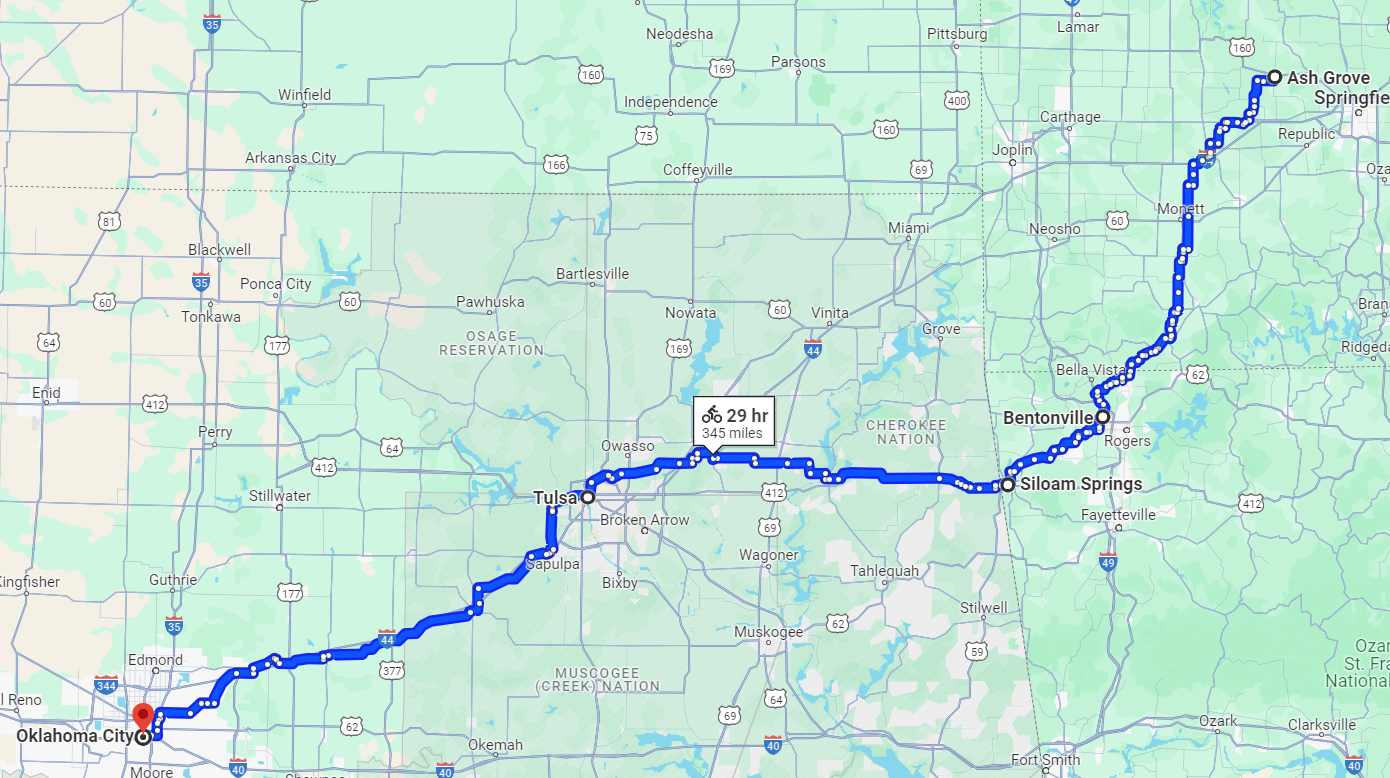
After Ash Grove it makes sense to me, at least, to ride south to Bentonville, Arkansas. This would take about two days and add 110 miles. There’s all kinds of flights to DC from this city thanks to the fact that it is the home of Wal-Mart.

Beyond Bentonville is the possibility of picking off Oklahoma. Tulsa is three days and 130 miles west. Add another 150 miles on old Route 66 and I’d be in Oklahoma City, another city with several flights to DC. All told, DC to Oklahoma City would make for a tour of about 2,000 miles. Tulsa and Oklahoma City have the added benefit of being on Southwest Airlines’ network, meaning I’d probably fly home for free.
Continuing on to Oklahoma City

Option 2: Laissez Les Bon Tons Roulez

This town is identical to the tour above until Marion, Kentucky just south of Cave-in-Rock. At Marion, I would pick up Adventure Cycling’s Great Rivers South Route, taking that to the start of the Natchez Trace near Nashville. With the exception of a detour to Muscle Shoals, Alabama to take in a bit of music history, I’d ride to Natchez, Mississippi. After that, it’s a few days of riding to New Orleans. The total mileage is about 2,100. Theoretically, I could take a train home from New Orleans but it would take at least 26 hours.

DC to Nola

I once had a business trip to Louisiana in April and could not believe how humid it was. Add ten or 15 degrees and you get pure misery. It probably would make more sense to just fly to Nashville, do the ride to New Orleans, and fly home. That would be about 900 miles and would take me about a month.
Thinking Ahead – Tour 2024 and Beyond

So here’s the thing. It was raining cats and dogs outside on dreary November day. I decided to give my bikes the day off and my thoughts turned to the future.

I have three events that constrain my touring activities for next year. In April, I’ll be in Indiana for the total solar eclipse. In May, I’ll be in Hartford for my daughter’s law school graduation. In early October I’ll be on the north shore of Massachusetts for a wedding. Of course, I want to be back in DC for the fall riding events so September and November are out. Barring some additional unknown obligation, that leaves mid-May through the end of August for touring. Perfect. Of course, plenty of other things can come up in the meantime but rainy days in November are perfect for dreams of summer on the roads.

Of course, one thing I still want to accomplish is to ride my bike in all 50 states. Most of the states I am missing are in the south and the middle of the country. Here are two ideas that I’ll be rolling around in my head for a few months.

Hot and Sweaty

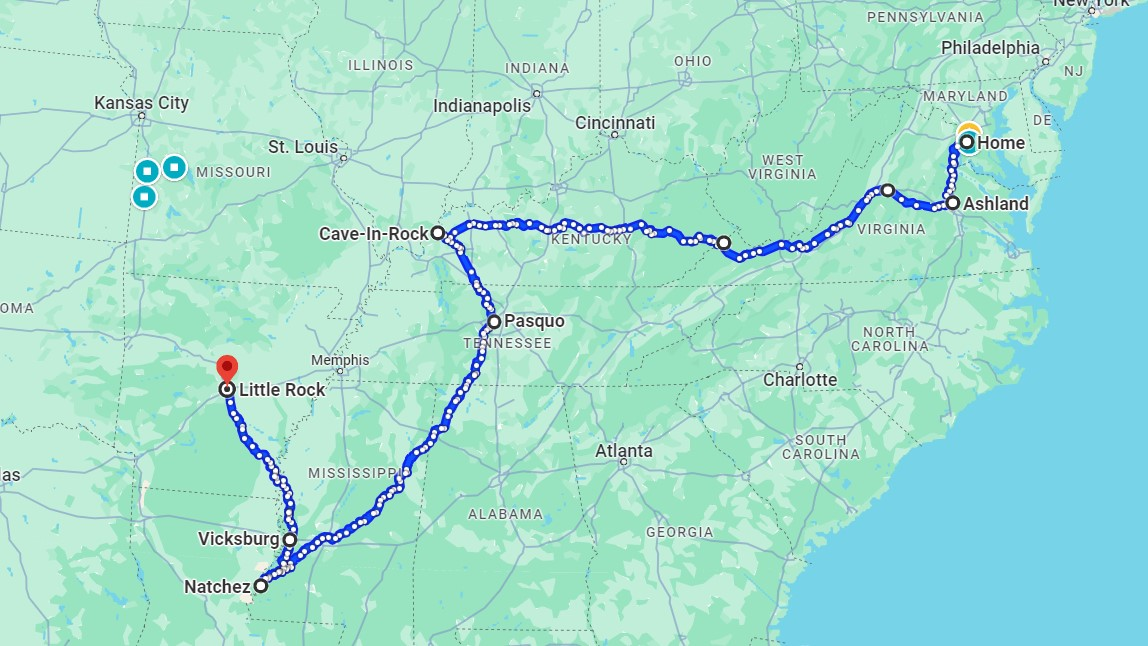
My southern tour idea would pass through Virginia, Kentucky, Tennessee, Alabama, Mississippi, Louisiana, and, maybe, Arkansas. (The states in italics would be new ones in my 50 states quest.) It would rely mostly on three Adventure Cycling touring routes: the Atlantic Coast, Transamerica, and Great Rivers South routes. Here’s how it would go. Riding south from the DC area to Ashland, Virginia, just north of Richmond (Atlantic Coast), I’d bang a right and head west to the Blue Ridge Mountains. Crossing over the ridge I’d drop into the Shenandoah Valley then southwest to the Kentucky border at The Breaks Interstate Park. I’d cross Kentucky until just north of Cave in Rock, Illinois (TransAmerica). From there I’d head south to the Nashville area where I’d pick up the Natchez Trace Parkway. The Natchez Trace goes southeast through Tennessee to the very northwest corner of Alabama then turns southwest across Mississippi. After the Trace, the Adventure Cycling route continues south, across the Mississippi River to Baton Rouge, Louisiana (Great Rivers South). Just beyond the end of the Trace I’d cross the Mississippi River into Louisiana through Baton Rouge to New Orleans and fly home. This makes for about a 1,700 mile tour.

This tour has some interesting aspects. First, it is logistically pretty simple. I only have to figure out how to get my bike and me home from the finish. Second, it uses the TransAmerica route for about half the distance. The TransAmerica has been in existence since 1976 so there are loads of places to stay. It uses the Natchez Trace which does not allow truck traffic and has numerous campsites and other places to stay. The Great Rivers South route goes near a few interesting places like Muscle Shoals, Alabama (famous for two music studios) and Tupelo, Mississippi (Elvis Presley’s birthplace). And if I get really ambitious there are scads of Civil War sites. The big downside to this route is that it can be oppressively hot and humid in the deep south. At least this means I can bring lighter gear. Two other unfun considerations are the dogs and steep hills of eastern Kentucky.

An alternative would allow me to pick off Arkansas. The bridge across the Mississippi at Natchez looks like a death trap (no shoulders, beaucoup trucks, rednecks in beat up pick up trucks, Easy Rider nightmares) so I would have to turn north somewhere along the southern part of the trace. I could ride 90 miles from Natchez to Vicksburg and cross the river there on an old two-lane bridge that is right next to an interstate bridge and likely to be lightly used. Once across I’d head north into Arkansas ending at Little Rock. The area along the river in Mississippi is a series of short steep climbs but oddly not too hilly in Arkansas. This 350-mile side trip is an awful lot of riding to pick off one state though.

The DC to Little Rock Tour. (Note New Orleans is just off the bottom of the map directly below Natchez.

Fly Over Loop

Should my spouse decide to visit her parents in northern Indiana, I could start a tour from there just as I did in 2019. This route would run through Indiana, Illinois, Kansas, Iowa, South Dakota, Wyoming, Nebraska, Colorado, Texas, Oklahoma, and Arkansas. I’d begin riding due south to Indianapolis where I’d pick up Adventure Cycling’s Eastern Express route. This route would take me west across Indiana and Illinois to Saint Charles, Missouri. There I’d pick up the Adventure Cycling’s Lewis and Clark route and follow the Katy Trail and the Missouri River west. I’d continue northeast of Kansas City into Kansas, Iowa, and Nebraska until turning west at Sioux Falls, South Dakota. I’d then follow the Adventure Cycling Association’s Pikes, Peaks, and Prairies route across the Badlands to Mount Rushmore. I’d head north along the Michelson Trail through the Black Hills to Deadwood. Next I’d turn west to check out Devils Tower in Wyoming before heading south across the prairie through Nebraska and Colorado to Amarillo, Texas. At Amarillo I’d bang a left and head east across Oklahoma into northwest Arkansas where I could finish near Fayetteville.

I suppose I could simplify this tour by riding straight across Iowa. That would take some additional planning though. The highlights of this tour would be the Badlands, Devils Tower, and the Michelson Trail, which has a stellar reputation among tourists. The lowlights would be heat and wind. Most of the Great Plains can get brutally hot in mid-summer. The long ride south from Wyoming to Texas likely would be into a strong headwind. Also, there are long stretches on this route without any services including water. BYOB.

The whole loop would be about 3,000 miles, the same distance as my Indiana to San Francisco tour in 2019.

It would make a heck of a lot more sense to start the tour in Sioux Falls but that would involve an additional logistical hassle. Also, I’d miss out on so much corn and soy and livestock.

Flyover Tour.

Beyond 2024 and 2025

Aside from Alaska, which would involve some sort of special one-off trip, I’d still need to pick off the southwest. There are two options.

Option one would follow Route 66 from Santa Monica, California through northern Arizona and New Mexico (with side trips to the Grand Canyon and Sedona) ending who knows where. I could even go all the way home which would be about 3,500 miles. If I still needed Arkansas, I would ride from Tulsa to Fayetteville before rejoining Route 66 in Joplin, Missouri.

Another option would be to cross the country from San Diego to New Orleans. This could be combined with the first tour above to pick off seven states in one go. That would be somewhere over 3,300 miles. Also, I’d probably stop in Phoenix to rent a car to go see the Grand Canyon and Sedona.

Any tour involving the desert Southwest would start in early April to avoid the impossible heat of the desert southwest in May and June. I’d finish in June.

The biggest impediment to conquering the 50 States challenge is age. I lost two good touring years to the pandemic which pushes a completion out to my early 70s. As old as that sounds I recall meeting two 70-something riders in my bike travels. I met one man near Fort Scott, Kansas. He was riding north to Sioux Falls, South Dakota before turning left for somewhere in California. I encountered the other elderly rider near the Oregon/Idaho border. “When I was young this was fun; now that I’m old, it’s work.”

Then there’s the 80-year-old man I met in Sheridan Lake, Colorado in 2022. He was riding a tadpole (two wheels in front) trike and pulling a trailer. His daily mileage was low but he started in Denver and was headed somewhere east.

Tour Prepping

Between doing the taxes, testing out the new, improved Little Nellie, and shopping for gear, I have begun preparations for my 2023 bike tour. The plan is to ride from home in Mt. Vernon, Virginia to Bar Harbor, Maine. From there, I ride home. Somehow. Using mostly the Adventure Cycling Atlantic Coast Route, I constructed a preliminary itinerary, mostly guided by the availability of campgrounds and motels. The ACA maps also contain info on where to buy food and the location of interesting places along the way.

New Gear

One of keys to a successful tour is getting a good night’s sleep. I have had mixed success in this regard. For last year’s tour I brought a Sea to Summit pillow. It’s much better than sleeping on a pannier filled with clothes. And it packs down to the size of a can of corned beef hash.

I have been using a lightweight REI Sleep Sack for most of my tours. This is a sleeping bag with very little insulation and an open toe box. It was great for sleeping on warm nights during my previous tours but it was woefully inadequate on the cold nights in the mountains out West last summer. I fear Maine may get a bit cool at night so it seemed like a good time to upgrade.

Last week I bought a Nemo Forte bag rated to 30 degrees. It packs down to about twice the size of the Sleep Sack but fits snuggly in one of my rear panniers. I gave it a try in my family room. Dang. Soo comfy!

This week I bought a Themarest NeoAir Xlite sleeping pad. It’s what Mark and Corey, two very sound sleepers, used last summer during our tour through the mountainous West. When I got it home I used the included air sack to inflate it. The air sack is the new thing in camp gear inflation. It’s a super lightweight bag with a valve at one end. The valve attaches to the intake valve on the sleeping pad. You roll the top of the bag down, trapping air inside. As you continue to roll the top down the air squeezes into the pad. Repeat as necessary. I had to do 13 iterations before the pad was filled. PIA. Mark and Corey used a small battery powered pump. You attach the pump to the valve and go about your business setting up camp. The pad inflates in a matter of minutes. No muss. No fuss. Long story short I’m going to get me a pump soon.

I tried the bag and pad out on my family room floor. It’s about as comfortable as sleeping in bed. The padded rug underneath helped but I’m satisfied that my sleep problems will be a thing of the past. I’ll test everything out in the backyard in April just to be sure but I have a very good feeling about this.

I also bought an REI brand walking cane. It collapses down to a couple of feet in length. I should be able to strap it to my rear rack or put it inside my rack top dry bag. This should come in handy when I get to Valley Forge and other places worth exploring off the bike. Take that spinal stenosis.

In addition to the pump, I’ll probably buy a new dry bag. My old one still holds plenty of stuff but it has a duct tape patch on one end which is not ideal for keeping things dry.

The Route

Using the Adventure Cycling maps, I did some cogitating. As I said, places to sleep are a key determinant of the length of each day’s ride. The maps tell me where to find campgrounds and motels but not Warmshowers hosts which are abundant. I factor in the Warmshowers options as I ride.

One of the disadvantages in travelling alone is that hotels and motels will be more expensive since I won’t be able to split the cost with other riders. One of the advantages of solo touring is the fact that Warmshowers hosts tend not to want to deal with more than one or two people per night. Thsi was a source of frustration for Corey. Mark, and me last summer. I should have many more Warmshowers options as a solo rider

The tour starts May 23, two days after a very busy week. I am planning on attending my 50th high school reunion in Albany, New York. I would have ridden to it but I will also be attending a Crowded House concert in DC a couple of days later. (The concert was rescheduled from September 2022 after the drummer hurt his back.) The route will begin at home and take me through 11 states (Virginia, Maryland, Pennsylvania, New Jersey, New York, Connecticut, Massachusetts, New Hampshire, Maine, and Vermont) and the District of Columbia, This will add two states, New Hampshire and Maines, to my 50 states quest,

Day one will likely be off route to take advantage of Mark’s offer to stay at his place in Linthicum, Maryland south of Baltimore. Riding the ACA route then cutting over to Mark’s place would make for an 80 mile first day. Using a more direct route, one that I used on my first tour in 1999 tour as well as on two other event rides to Baltimore, I’ll be able to shave 25 miles off that distance.

After Mark’s place, I’ll rejoin the ACA route, bypasssing Baltimore to the west and heading up a rail trail to York, Pennsylvania. At York, I hang a right and head across the Susquehanna River to Lancaster County, Amish country. After Lancaster comes Valley Forge which I have never been to.

The route continues skirting Philadelphia to the northwest. North of Easton I cross the Delaware River into New Jersey and head up the Delaware Water Gap. (I understand a detour is in place because of a landslide in the gap. I expect I’ll be doing some climbing.) I’ll ride up the Delaware to Port Jervis, New York. Travelling into New York, I’ll follow a rail trail along the eastern side of the Catskills until I cross the Hudson River on the Walkway over the Hudson Park, a repurposed raillroad trestle at Poughkeepsie. Here I may divert to check out Hyde Park just to the north of Poughkeepsie. The route continues into Connecticut and across the Berkshires. (Knees don’t fail me now!)

At Windsor Locks, after ten days of riding I’ll leave the the route and head south to West Hartford where I will take a rest day at my daughter’s place. Hopefully there will be a minor league baseball game that night.

Back on the road I’ll go back to Windsor Locks and turn right, going across the northern edge of Connecticut to the upper Northwest corner of Rhode Island.

(One possible change to my journey would involve riding off route to Providence where I went to grad school. After that I’d head east to Cape Cod and out to Provincetown. Then take a ferry across Massachusetts Bay to Boston where I went to college. The downside to all this is getting back on the ACA route which bypasses Boston about 30 miles west and north of the city.)

From the corner of Rhode Island the route heads northeast to Westborough, Massachusetts between Worcester and Framingham. Continuing northeast the route enters New Hampshire north of Methuen, Mass. After a night in East Derry, I will head to the coast and enter Maine near York. After that, I ride 200 miles up the coast to Bar Harbor arriving around June 10.

I’ll spend a day exploring Acadia National Park and Mount Desert Island before heading back down the coast following the Adventure Cycling Northern Tier Route. This route coincides with the Atlantic Coast route until Brunswick, Maine before leaving the coast and crossing the Green and White Mountains in New Hampshire and Vermont, respectively, more or less in a straight line.

At Ticonderoga, I’ll re-enter New York State and follow Lake George and the Hudson River down to Albany where I grew up and have family. I’ll take another rest day there.

The current plan is to ride down the Hudson to Poughkeepsie where I will rejoin the Atlantic Coast Route for the ride back home.

I expect I’ll make it home by the first week in July with 2,200 miles of riding under my belt. This will get me back in plenty of time to partake in family events, most importantly, a visit from my son who I haven’t seen since the pandemic hit.

If my son’s itinerary results in him arriving in August, I may head west from Ticonderoga on the Northern Tier instead. Where I would turn south is anybody’s guess. At most this could add 600 or 700 miles to the trip. (In general, the longest route would go from Ticonderoga to Erie, Pennsylvania where I would turn south to Pittsburgh. From Pittsburgh to home is 350 miles of mostly off-road riding.)

Stay tuned.

Connecting and Extending the Mount Vernon Trail

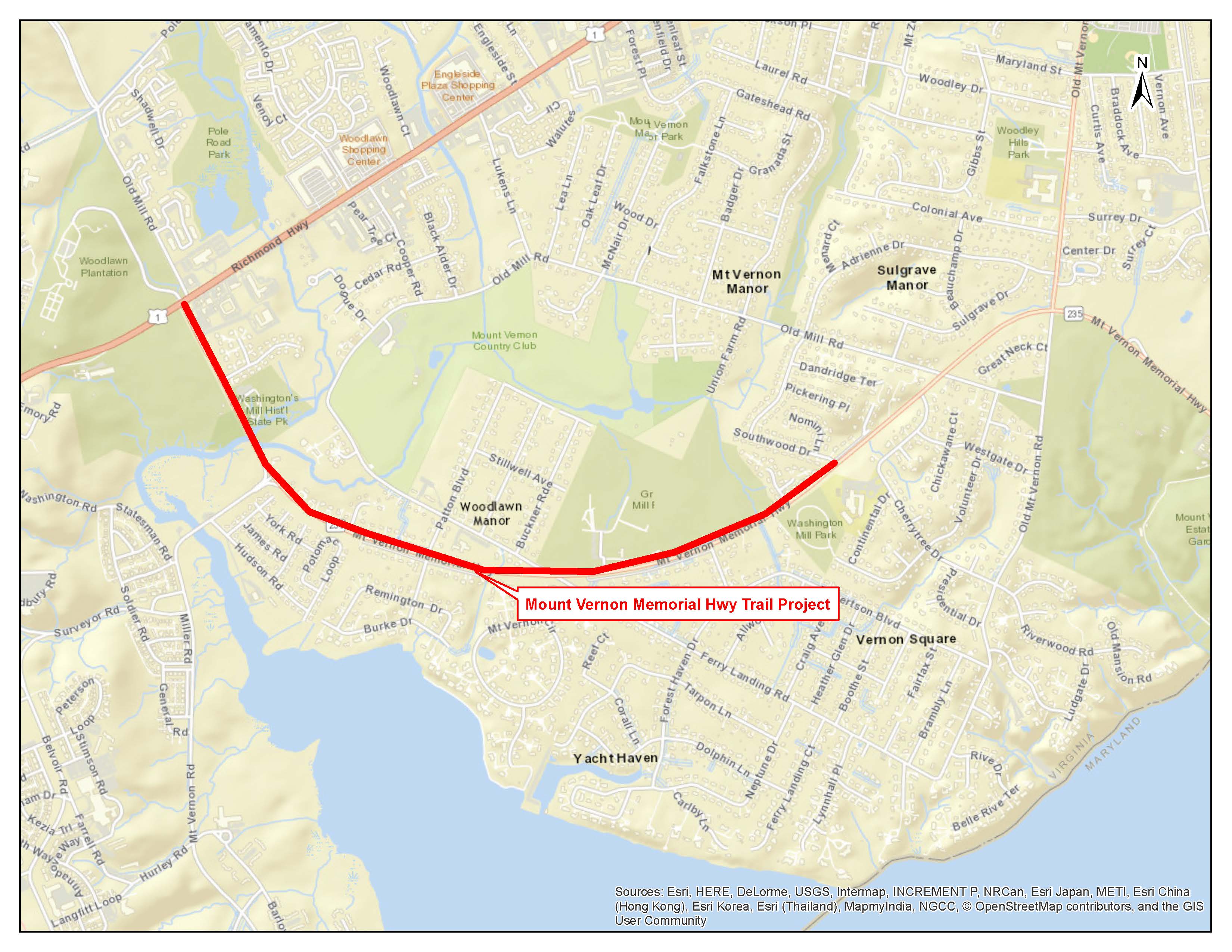
The Mount Vernon Trail, a facility of the National Park Service, is well known to cyclists, runners, and walkers in the DC area. It extends from Theodore Roosevelt Island in the north to George Washington’s Mount Vernon Estate in the south. Beyond Mount Vernon, there are trails of a sort but they come and go for three miles along the two-lane Mount Vernon Memorial Highway to US 1 where new trails continue south down through Fort Belvoir. (The mega re-design of US 1 to the north of Fort Belvoir will include separated bike lanes. ) The Fairfax County Department of Transportation is planning to connect the existing trail segments along the MVMH to provide a continuous trail that connects Mount Vernon to US 1.

Last night I attended the first public meeting about this project. It was run by Chris Wells, the Fairfax County Bicycle and Pedestrian Coordinator with significant additional remarks by Dan Storck, the Mount Vernon District Supervisor.

Beyond its local significance the Mount Vernon Trail is part of other much longer trail systems, including the Adventure Cycling Association’s Atlantic Coast Route, the East Coast Greenway, and the Potomac Heritage National Scenic Trail.

The project is an admirable one, but it has significant shortcomings.

The Mount Vernon Trail itself stops at the southern end of a parking lot. To continue south cyclists have two options. They can walk the sidewalk in front of the entrance to Mount Vernon or ride (illegally) on the George Washington Memorial Highway for a few hundred yards. Neither of these shortcomings is addressed in this project.

The GW Parkway ends at Mount Vernon. To continue south, travelers use the MVMH. At this point a new-ish side path exists for about 1/2 mile to a traffic light at Old Mount Vernon Road. After the light, there is an old, narrow asphalt path that is in lousy shape with tree roots and debris. After a few hundred yards that path ends and path users need to cross the MVMH to get to another similarly decrepit path along the MVMH. This path has the added feature of a series of abrupt ups and downs. This path segment ends after about 1/4 mile at Southwood Drive. Local residents report that these three parts of the trail are virtually impossible to ride on a bike and in such poor condition that even running is problematic. Unfortunately, improvements to or realignment of these side paths are not included in the project scope.

The first of the proposed new segments would begin on the opposite side of the MVMH from this last bit of path. It would continue only a few hundred yards to another existing side path that extends from Peartree Landing (a neighborhood street) to the entrance to Grist Mill Park, which contains soccer fields, a large playground, and the area’s free mulch collection. This existing segment is wider and newer than the others describe above. Nevertheless, the local residents I talked with said this segment also has problems with tree roots.

Beyond Grist Mill Park a new trail segment is planned that will cross the southern end of Old Mill Road until it reconnects with a little used, existing frontage road. After the frontage road, the new trail will begin again and cross Dogue Creek on a new steel and concrete bridge.

After Washington’s Grist Mill, the new trail segments will end. Those wishing to continue south on a trail will have to re-cross the MVMH to connect with a new existing trail that continues a couple of hundred yards to US 1.

The project plans include wayfaring signs, as well as improved crosswalks and bus stops.

The project team’s consultants were in attendance. Maps of the project were on easels for review. There were about 40 – 50 people in attendance. Considering the fact that this was a preliminary meeting, this was an impressive turnout. Attendees included people who live along the project corridor and others, like me, who use the corridor for cycling.

Concerns raised included:

  • The design of the Dogue Creek bridge. It will be steel and concrete which will hopefully lessen the crashes that are endemic to the Mount Vernon Trail’s wooden bridges.
  • Crossing the MVMH is dangerous now. Recently, a 15-year old runner was hit by two cars as she crossed the road. (She lived but is in for a long recovery.) Attendees asked for traffic signals of some sort and consideration of sight lines when positioning cross walks.
  • Local residents say that traffic has increased significantly since the military base re-alignment moved thousands of personnel to Fort Belvoir. The residents say that the 45 miles-per-hour speed limit is too high considering the highway traverses a residential area. This is clearly one of those places were Virginia DOT prioritizes moving commuters over residential users.
  • Local residents also decried the condition of the decrepit existing trail segments.
  • The crossing at Old Mill Road is a potential problem. Local residents cut through a neighborhood and a wooded perimeter area to access the park now to avoid this intersection.
  • Drainage is a problem now for one resident whose home abuts a new trail segment.
  • The trail right of way could be 20 to 30+ feet depending on the type of drainage used at the highway’s edge. One resident noted that his driveway is only 40 feet long.
  • Residents clearly would prefer to limit the trail to one side of the highway.
  • Trees will have to be removed to accommodate the new trail assuming it stays in its current alignment.

The next step is for the project team to do a detailed analysis of the corridor and produce a preliminary design for public comment. That process will take six to nine months.

As readers of this blog know, I do not much enjoy doing bike advocacy work, but I have to say that this meeting was actually fun. There was concern without anxiety on the parts of the attendees. I think they had plenty of time to have their say. Chris Wells and Dan Storck did a great job of listening and making thoughtful observations. Project team members and Dan Storck were taking notes. With projects like these the old saying “The devil’s in the details” holds.

As for me, I was encouraged to see that Chris has picked up where Adam Lind (currently cavorting in Santiago, Chile) left off as Bike/Ped coordinator. This was my first interaction with Dan Storck. My district supervisor is an avid cyclist. Obviously, he has to take into consideration all users and constituents but it is a great relief to know that he speaks my language.

As for me, I doubt I will use the new trail. I don’t use any of the existing trails segments. I am comfortable in the road, but I understand that others, most importantly the people in the adjacent neighborhoods, are not. I also doubt bicycle tourists, experienced recreational riders, and commuters will want to meander back and forth across the highway. However, the project clearly addresses many existing shortcomings for walkers and runners and less experienced cyclists.

Finally, I did get a chance to talk to Dan Storck about his annual Tour of Mount Vernon bike ride. When I first heard about it, I thought is was a dinky neighborhood ride. Wrong. It’s the real deal at 36 miles and he’s very excited that it’s catching on after only a couple of years. I didn’t ride it last year because I was already committed to WABA’s 4th Annual Cider Ride. Hopefully, this year WABA and Supervisor Storck can coordinate dates so I can do both.


No Way So Hey – Day 26

I began the day dowingca quart of sports drink and 1/3rd of a sub sandwich. And then I hit the road at 8 am. 

The directions were easy: Go south. 

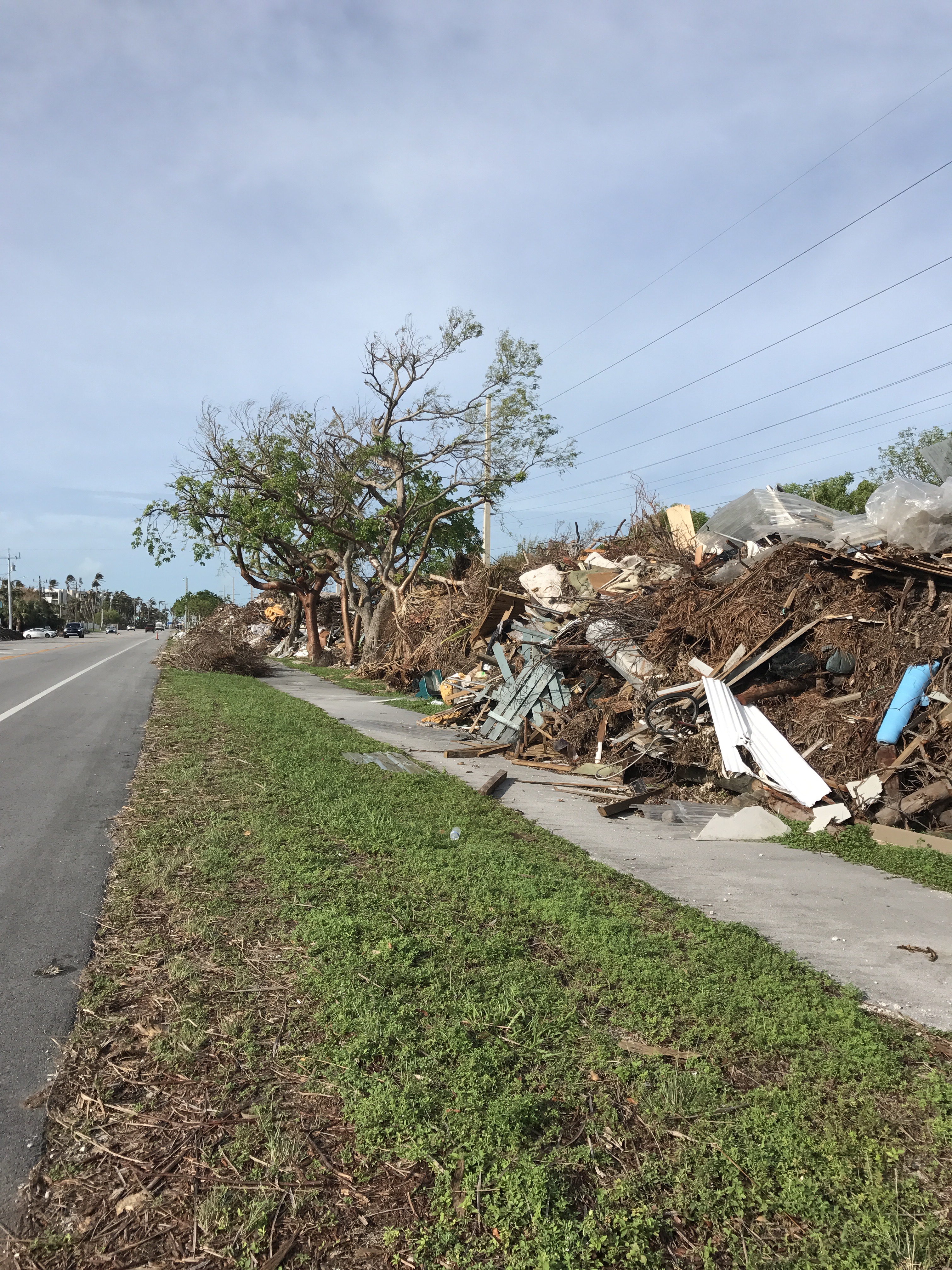
Storm debris increased with each passing mile. Some stretches were perfectly clear, probably because crews had finished the clean up. In other areas piles of debris ran down one side of the road. 

The middle Keys got hit hardest and it showed. Debris was strewn among the mangroves along the east side of the road. Roadside piles were bigger and bigger. At a state park a consolidation area was set up. Plant based debris was being ground up into a mulch. Lord knows what will be done with the appliances, furniture, and house parts I saw. South of marathon the mother of all debris piles stretched on and on. Mount Irma. It’s hard to believe a month has passed. I can only imagine what Puerto Rico is dealing with. 


Under normal conditions there would be flowers and breezes. Now junk and smell. 

Any discomfort I might have on this trip pales in comparison to what these people have been going through for the last month and a half.

If I had s place to stay in the middle Keys I’d have gone to the sea turtle rescue place of the dolphin research center. But the only place to stay was in Key West. 

The morning was cool and humid. Then the clouds burned off. It got hot. I drank and drank and drank. I forced myself to eat so that I wouldn’t bonk.

As it turned out stores were open almost all the way to Key West. I stood in one. A young Israeli dude started talking to me about the ride. He was incredulous. Hr called me Forest Gump. Just last night a convenience store clerk did the same. Bike Forrest! Bike!

The ride wasn’t all trashy debris. Many miles were spent in bridges with the Atlantic on my left and the Gukf of Mexico on my right. The water was a pale green. Just beautiful.


I rode on the shoulder of US 1 and never had a problem with cars. One picked up pulling a trailer right hooked me at an intersection but he was no match for The Mule.

(The bike path along US 1 would have been nice but it was blocked by debris so often as to be useless. Near the heart of the storm it was torn to pieces.)

I crossed the seven mile bridge. Seven miles with ocean and gulf. Jesus. What a ride.


At 80 miles the skies turned black, just like yesterday. Temperatures dropped. Ran fell. The storm passed. I rolled into Key West and took the path along the sea wall.

I ended up at the Southernmost point in the 48 states. No more road. 


Dang.

Former co-worker Melissa is in town. She was an all star on Mrs. Rootchopper’s staff. She steered me to a local Cuban place. I ate all the food. So good. 

And so I rode 101 miles today, 1,953 miles to the end of the road. Time for s few days of rest before a ferry, two more days of biking, and a long train ride home. 

No Way So Hey – Day 21

Although I am on a solo bike tour, I am constantly reminded that I am not alone. I am constantly helped by trail angels, people who help bike tourists, often for no compensation. I heard of June Curry of Alton Virginia who gave cold water and cookies to bike tourists slogging up Afton Mountain in Virginia’s Blue Ridge. She did this for decades until the calendar took her from the mountain. 

I was helped last night and this morning by Jackie and Ed, aunt and uncle of my college friend Wendy. I arrived at their home in a monsoon soaked to the bone. The fed me, watered (and beered and wined me) and cleaned my clothes. All the time the storm raged outside. I’ve been to Thailand in monsoon season. Florida has Siam beat by billions of gallons.

Ed and Jackie, Awesome Trail Angels

I left their home stuffed with a delicious breakfast and carrying food for the road. Miraculously it was not raining. I took bike trails back to the Florida Atlantic Coast and met a constant gale from the ocean. 

The Lehigh Trail near Flagler Beach

For ten miles I was sandblasted until I traded sand in my eye and the view of raging surf for a sheltered parallel route.  Along the seat I spotted an Indian burial mound. (I’m no anthropologist; there was a roadside sign.)


I have been fighting a cold for three days. It left my throats and moved to my belly. I stopped for early lunch exhausted after only 30 miles. I ate and drank a vanilla shake to no effect. Riding away I came to realize that both my front and back brake pads were dragging on my wheel rims. 

I freed them with my hands. When I reapplied the brakes they wouldn’t work. I stopped using my best Fred Flinstone food dragging. 

I rode through Daytona Beach, a place filled will sunburnt scraggy street people. So depressing. 

Down the road in New Smyrna Beach I found a bike shop, Fox Firestone Bicycles (www.foxbikes.com). The mechanic was at lunch so Debbie sent me to her co-owner and husband, Andy at the ATV and Moyorcycle shop next door. Andy pronounced my front cable dead. I went back to the shop and left my bike to get a cold sports drink at the gas station across the street. 

Debbie and I spent some time talking to George, a septuagenarian bicyclist who was hit by a car going 50 miles per hour 17 years ago. He looked younger than me. Wow. 

While we chatted I fixed the rear brake. The same problem happened during my 2005 bike tour from D.C. to Indiana. I didn’t have the tools or competence to fix the front cable.

Harrison, the mechanic arrived and replaced the cable in five minutes. The old one was rusted along 80 percent of its length. He also tweaked my repair to the rear cable. When I left my brakes worked better than when God tour started. Fox Firestone dropped everything to help out a stranger on a bike tour. Trail angels. 

Harrison fixing The Mule

While all this was going on Debbie researched places to stay. 30 miles south she found The Wayward Travellers Inn (www.thewaywardtravellersinn.com).

Fox Firestone Bicycles people are trail angels.

I headed south passing up an opportunity to see manatees near Cape Canaveral because the 8 1/2 mile access road banned bikes and a bridge was shown as out on The Google. 

 So I rode to Mims Fla and called the Inn. It’s a beautifully renovated old home. It only has two guest rooms but they are well appointed with antiques and large inviting beds. The owners, Roan and Karrie, are totally cool folks from Utah who chatted my ear off upon arrival. 

Roan gave me a ride in their electric Prius to and from a nearby restaurant where I stuffed myself with food and beer. 

After the Inn-provided breakfast, I will hit the road in search of gators and, perhaps, manatees. 

Another 79 mile day despite the travails and delays. The tour is now 1,528 miles long.

No Way So Hey – Day 5

I never sleep well in a tent but I did much better last night. Special thanks to Michele Cleveland who recommended a better sleeping pad. I still tossed and turned but the eerie animal that sounded like a werewolf may have had something to do with it. I was also visited by a small critter scratching around my tent for food. And there were owls hooting all night. Nature is noisy. 

The day began at last night’s gas station eatery. The food so far has been greasy and disgusting so I wasn’t surprised that breakfast was more of the same.

A kindly driver ed teacher who was fueling up told me that visibility was poor so I put on my vest and hit the road. 

Marshy land and farmers fields for mikes and miles. I sang songs to myself and had conversations with my monkey mind. The terrain here rivals northern Indiana for levelness. So my legs were having no trouble at all.

I stopped at every store and bought either food or drink, fearful that I’d hit a string of closed shops. I found this sign interesting. 

I stopped I for an early lunch in Colerain. Cafe 45 was not listed on my maps but the food was cheap and tasty. At last!

The rest of the day was more pool table riding with increasing heat and humidity. A customer in the cafe told me my destination, Plymouth,  was a cute fishing town. 

After miles of farmland I climbed a bridge over the Cashie, Middle, and Roanoke Rivers. Very pretty. Then I rode into Plymouth. What a disappointment. I called a campground 30 miles further on. They were booked. 


The motels in Plymouth were either a Holiday Inn Express or two run down motels. I opted for one of the motels. No cable, no TV, no WiFi. I complained at the desk. The dude fixed the TV and cable but said I was too far from the WiFi. Then he said the WiFi comes and goes with the weather. I said lower by bill. No, the manager says WiFi is complementary and not part of the bill. 

I had checked in to the Monte Python Inn!

If you want you can leave and get a refund but you have to leave in 5 minutes. (This is actually what I was told.)

Well since the AC and the shower worked I decided to stay. I am sitting outside connecting to another room’s WiFi.

There are no restaurants in sight so my convenience store stash will have to suffice. for dinner. 

I should have known Plymouth would be a problem. This is the town funeral home. 


You can’t make this stuff up.

Well the day was nice until now. I made it 68 miles. So far that makes 361.5 miles in 5 days. Tomorrow I plan to ride to New Bern. 

My Fiend Irma

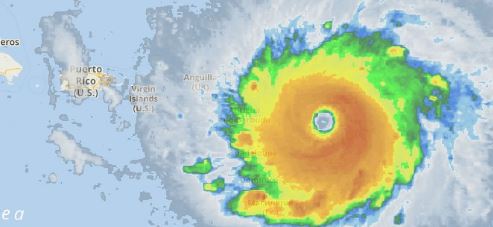
I apparently have been infected with the notorious WABA weather virus. Events run by or benefiting the Washington Area Bicyclists Association have a rather distressing propensity for crazy weather. My planned tour to Key West is beginning to look rather dicey. Hell, Key West is looking dicey.

Irma

During my 2005 tour I encountered the remnants of Katrina but I was in Ohio. I got rained on. I noticed the price of gas had spiked as my tour continued. This is very different. This monster could threaten not just my destination but most of the entire route. Not that my tour is of much importance in even the not-so-grand scheme of things.

So what are the alternatives if the Keys or some other part of my route get clobbered?

Option 1: Go south until I can’t anymore, then turn around. Maybe this would involved riding to some nifty place like Charleston or even St. Augustine, turn around and ride home via the Outer Banks of North Carolina.

Option 2: Bah Hahbah. The set of maps I bought go from Bar Harbor Maine to Key West. I could just head north. I ride to Bar Harbor Maine would lack the heat (and humidity)  of the Keys trip but riding up there and back would be about 1,500 miles. It would also be much, much hillier.

Option 3: Kill Myself on the Blue Ridge. It’s something like 600 miles to the other end of the Blue Ridge Parkway in Cherokee NC. What could go wrong? Oh, it’s unbelievably hilly. And how would I get home?

Option 4: A Big Loop. I could ride from here to Erie Pa then bang a right and ride to Albany or maybe through the Adirondacks. Then I’d take NY Bike Route 9 or 11 south to DC. It’s easy to put together a tour of 1,500 miles. Much of it would be on flat trails and canal towpaths.

Option 5: Ride up to Vermont, around Lake Champlain, across the Adirondacks and back on NY and PA bike route 11.

One problem is that Irma has to go somewhere after the Carribean. If it heads up the East Coast any of these options could be a washout. No decisions will be made until Monday at which time I’ll have a much better idea of what’s doable.

In the meantime, my fingers are crossed for Linel’s and Richard’s families in Puerto Rico, with Renee in Florida, and with Wendy on the southern coast of North Carolina.


Key West Bike Tour Planning

  • My Atlantic Coast Route maps have arrived from the Adventure Cycling Association. I spent an hour plotting a tour from DC to Key West.
  • There are many maps covering about 30 miles per map. Each one has tons of detail indicating camping, food and lodging locations along the way. Mostly this means that you have to curtail a day here and there to find a place to rest your head. It also means that getting past Miami will likely involve riding a century. This will not be a whole lot of fun.
  • Each of the maps has a narrative. Sections of the Florida Atlantic coast sound very unfun. There are long sections of the route with no bicycle repair facilities. Derp.
  • I addition to riding the main route straight to Key West, there are four optional side trips to choose from.
    • I can ride the outer banks of North Carolina. This adds 80 miles and about 2 days to the trip. It might also add a whole lot of wind. And sand. I’ll probably take the inner route since I have already driven the outer banks.
    • A spur route goes to Charleston. This would be fun. Another 2 days.
    • A second spur route goes to Savannah. Another 2 days.
    • There is an alternate route through the Okefenokee Swamp. This only adds 15 miles and I’ll almost certainly do it just for the bragging rights.
  • I tried to plot a course that averaged 60 miles per day. It’s not really doable, because of camping/lodging issues. I’ll probably end up averaging 70 miles per day which is okay since I don’t expect to be dealing with a lot of hills once I get to North Carolina. I am more concerned about wind and thunderstorms and meth addled rednecks and alligators. Oh my.
  • A possible alternate route would take me diagonally through Florida from Jacksonville to Orlando and on to Fort Myers on the southwest coast of the penninsula where I would take a ferry to Key West then ride back to Miami. The instructions for riding in Fort Myers are pretty scary. (Ride on sidewalk. Take the lane. Call your momma.) Also, this diagonal route might cause me to bypass Saint Augustine which might be the coolest thing ever.
  • I am still debating with myself whether to do this as a straight unsupported tour or to do Jacksonville to Key West as part of a supported charity ride. The charity ride has lots of logistical advantages. Basically I’d flip the tour on its head. I’d have the bike transported to Jacksonville at the start, ride back to Key West, then get a lift in the support support van, back to Jacksonville, and ride home). The charity ride adds the burden of raising $2,000 by October. Over the last weeke or two, I have watched a friend drive herself to distraction raising money for a charity (for a different ride) in the last couple of weeks. Being a world class introvert, I honestly don’t need the stress nor do I feature hitting people up for money. Worst case scenario: I raise only a couple hunder bucks and I’m on the hook for the shortfall.
  • I can think of a thousand reasons not to do this trip at all. So the thought of just getting on the damned bike and riding until I run out of road has a very strong appeal. I can figure out the return logistics once I get to the Keys. There are three options: fly back, take a train, or rent a van and drive my ass home. What I don’t want to do is schedule the return too far in advance. Then I would stress out about meeting a flight or train for the last week or two. The best option is to fly Southwest back (using points) and ship the bike home via bikeflights.com.
  • I know of 3 or 4 people who live directly on route (depending on my specific route). I am not above mooching a layover at their places.
  • Finally, there is the unanswered question: what size bike pump would I need to fend off meth-addled rednecks and alligators?


Some Ride/Hike Ideas for 2016

About a year ago I was admonished by a friend for sounding wishy washy regarding my 2015 vacation plans. “Stop planning. All we have is today” was her way of saying don’t plan, DO!  Irony alert: in January 2014 she told me of her plans to obtain certification to teach in DC schools and to open a business. She followed through on none of it, eventually leaving town. Even so, she had a point.

I suck at advance planning. Somehow I managed to do a bike tour, a non-bike trip around the world, nearly a dozen day hikes, half a dozen bicycling events, and take in a bunch of Nationals games. So with that in mind I began thinking about things to do in 2016.

I anticipate one non-biking vacation (to Sweden and thereabouts) to visit my daughter.  (A return to Thailand in the dry season would be nice but I can’t face the 18 hours of flying right now. Maybe 2017.) That will leave plenty of vacation time. So here are some ideas I am tossing around in my head.

Hiking: there are still many, many hikes to do in the Shenandoah National Park. Also, I have barely scratched the surface of hiking in nearby Maryland and Pennsylvania along the Appalachian Trail. One possibility is to gear up and do some overnights. I have never done this and it would be an interesting extension of my day hikes (not to mention save on driving home after a day’s worth of hiking).

Biking Events: WABA swears that it’s going to offer a century ride this year.  If it works into my schedule, I’ll definitely do it. Then there are the usual events: Vasa, Cider, 50 States, Backroads, and Great Pumpkin. I’ve done all of these several times, but the Backroads course was moved to West Virginia this year. I was in Australia and missed it. I can’t wait to do the new version. Two more that I keep threatening to do are RAGBRAI and the Five Boro Ride in New York City. Both of them are cattle drives. Both offer logistical challenges. Some of what follows are a lot easier to do.

Bike Trails: There are all kinds of cool trails around here that I haven’t ridden. Here’s a list of Virginia trails:

  • The Virginia Capital Trail goes between Williamsburg and Richmond. This could be a fun 2-day deal or a long single day ride.
  • High Bridge State Park down near Farmville and Appomattox looks really cool with a long, high bridge.
  • The Virginia Creeper Trail is a bit of a drive from DC. It’s only 34 miles but could be a beast of an out and back ride.
  • The New River Trail is a 57-mile trail that looks really promising with 30 trestles and bridges and two tunnels. This is a two-day ride with camping I think.

In Pennsylvania the Pine Creek Rail Trail runs 63 miles through the Grand Canyon of the East. Looks like a good overnight camping round trip to me.

Bike Tours: Right now I have eight possibilities on my list. All in the Eastern U.S.

  • Skyline Drive and Blue Ridge Parkway: This is a monster tour, 578 miles from Front Royal, Virginia to Cherokee, North Carolina. How the hell I’d get back is anybody’s guess. It’s also super hilly so I figure I’d be lucky to average 45 miles per day, 13  days of riding. This could be beyond my physical abilities. (Never stopped me before.)
  • The Natchez Trace: This 444 mile road is truck free. Tack on another 90 miles or so and the route would go from Nashville to New Orleans. Logistics on this one is a bit pricey (two bike flights). Bike Friday to the rescue?
  • Figure 8 in Vermont, New Hampshire, and New York: Adventure Cycling has two routes that form a figure 8. One loops around Lake Champlain, the other does a lap of the Adirondack Park. This one would be logistically pretty easy as I have family in the Albany area where the Adirondack route begins. The total distance exceeds 700 miles. The riding in Vermont and upstate New York is incredibly nice. Also weather up yonder is pretty much perfect for cycling in June – August.
  • La Route Verte: There are over 5,000 kilometers of marked bike routes in Quebec. The possibilities are endless. Then there is the interesting prospect of conversing in my horrid, mostly forgotten high school French. The idea of cycling to Quebec City, which I have never seen, or around Montreal is pretty intriguing. Getting there is a bit of a haul, but c’est la vie.
  • A New Kind of Rail Trail – North: Amtrak now has roll on bike service on the East Coast. Theoretically (relying on Amtrak is always an iffy proposition) I could take my bike on a trail and ride to Brunswick Maine, then ride up to Acadia National Park and ride all or part way home.
  • A New Kind of Rail Trail – South: Alternatively, I could take the train to Florida, ride to Key West, ferry to Tampa and ride across the state to Amtrak in Miami. Or just ride home.
  • Around Lake Michigan: This one starts in Monroeville, Indiana, one of the most bike touring friendly small towns in the US. It heads north through lower Michigan into the Upper Peninsula. Then across to Wisconsin and returns by crossing Lake Michigan on a ferry.  It’s 1,100 miles. Logistics would be simplified by using my in-laws house in north central IN as an alternative starting point.

In the increasingly likely (yet still somewhat improbable) possibility that I retire there is this:

  • The Trans Am/Western Express/Northern Tier Cross Country Ride: There remains a faint possibility that I might retire this year. If so, adios, amigos! I don’t know which route I’d take but the possibilities are numerous. The Trans Am is the classic route from Yorktown to the Oregon coast through Yellowstone. The Western Express shortens the Trans Am by taking a b-line across Utah and Nevada for California. The Northern Tier goes close to the US-Canada border.

Once I find out when the WABA Century and the Sweden trip will happen, I’ll pick two of the tours and as many events and hikes as my aging bones can handle.